


Home Buyer Demand Slows in October as Uncertainty Takes Hold
After a busy summer, the fall housing market is cooling down — and this October’s numbers confirm that buyer momentum has slowed across much of the country.
According to Realtor.com’s latest October 2025 Housing Market Trends Report, pending home sales slipped 1.9% year-over-year, while homes took an average of 63 days to sell — about five days longer than this time last year. Even though active listings remain higher than a year ago, new listings fell 2.7% from September, signaling a more cautious tone among both buyers and sellers.
Why the Slowdown?
Several factors are converging this fall:
- Government Shutdown Uncertainty
The federal government shutdown that began on October 1 has injected fresh uncertainty into the economy. In regions with a high concentration of federal workers — such as Washington, D.C., Maryland, and Virginia — housing activity dropped sharply. But even in other parts of the country, the ripple effects are being felt through delayed loan approvals, pauses in flood insurance processing, and a general cooling of consumer confidence.
- Seasonal Shifts
Historically, buyer activity slows as we move into the holiday months. This year, that normal seasonal slowdown is compounded by macro-economic concerns and affordability pressures that have built up throughout 2025.
- Affordability Fatigue
Despite mortgage rates easing slightly from their summer highs, home prices remain elevated in many areas. Combined with everyday cost-of-living increases, buyers are showing signs of fatigue — taking longer to make decisions or waiting for price reductions before jumping in.
- A first-time-buyer squeeze.
Entry buyers are pulling back: their share of purchases fell to 24%—a 43-year low, as higher monthly payments and down-payment hurdles bite. On a “typical” listing, a first-timer with ~9% down faces an estimated $3,240/month all-in payment, while many compete with rising all-cash activity and older repeat buyers with more equity. Sentiment has turned cautious (“bad time to buy”), and affordable/starter inventory remains tight in many markets despite pockets of improvement.
What It Means for Sellers
Sellers shouldn’t panic — but they should adjust their expectations. Homes are taking longer to sell, and roughly one in five listings saw a price reduction in October.
This means pricing strategy and presentation matter more than ever. Staged, move-in-ready homes that are priced accurately for their market are still attracting interest. But the “list high and test the market” approach is not working as it did a few years ago.
What It Means for Buyers
For buyers, a slower market can actually bring opportunity. With less competition and more motivated sellers, this fall could be an ideal time to negotiate favorable terms. Local inventory is still higher than last year, meaning there’s more to choose from — and fewer bidding wars to worry about.
Local Perspective: Ocean County & the Jersey Shore
In our local markets — from Point Pleasant, Toms River and Forked River to Little Egg Harbor, and LBI — we’re seeing the same measured pace reflected in national data. Showings are steady but less frenzied, and buyers are taking a more analytical approach.
That said, homes in move-in condition or in sought-after communities (like Silver Ridge, Holiday City, Greenbriar, and Crestwood) continue to draw strong attention. Demand for shore-area properties remains consistent, though buyers are negotiating harder on price and inspection terms.
Staying Ahead
At Coldwell Banker Riviera Realty, we continue to monitor these market trends closely. Whether you’re buying or selling, informed strategy is everything — and our team is here to help you navigate shifting conditions with confidence.
If you’d like a personalized October Market Snapshot for your neighborhood or community, contact us today.
📞 Call your local Riviera Realty office
🌐 www.RivieraRealty.com
📧 ContactUs@RivieraRealty.com
Pending Home Sales Hold Steady — What It Means for Buyers and Sellers in Ocean County
The National Association of REALTORS® just released its September Pending Home Sales Index (PHSI), and the numbers show a housing market that’s holding steady—neither accelerating nor retreating. Nationally, pending home sales were flat month-over-month (0.0%) and down 0.9% compared to last year.
This index measures signed purchase contracts—the step before a home sale closes—making it a leading indicator for what’s ahead in the real estate market. Typically, pending sales translate into closed transactions about one to two months later.
🔹 A Regional Split
The latest report shows that the Northeast and South saw modest gains, while the Midwest and West experienced declines. Here in New Jersey and the greater Northeast, that’s welcome news—suggesting a steady flow of motivated buyers even as fall settles in.
🔹 What’s Driving the Market
While mortgage rates have dipped slightly, affordability remains a key challenge for many buyers. Still, lower rates combined with a bit more inventory are helping balance the market. Existing-home closings actually rose 1.5% in September, reflecting the rebound in contracts signed earlier in the summer.
The next Pending Home Sales report, covering October activity, is set for release on November 25, 2025—and will offer another snapshot of where the winter market is heading.
🔹 What It Means for Ocean County Sellers
For sellers in communities like Forked River, Barnegat, Lacey, or Long Beach Island, the data points to a stable fall market. Well-priced, move-in-ready homes are still attracting attention. With contracts steady and rates softening, it’s important to:
Price strategically. Buyers are value-sensitive; homes that reflect current comps get faster results.
Be proactive. If your listing goes 10–14 days without serious showings, consider adjusting price or presentation.
Use timing to your advantage. Listing before the next report (Nov. 25) could help capture buyers looking to close before year-end.
🔹 What Buyers Should Know
For active buyers, this is a sweet spot of opportunity—a balanced market with fewer bidding wars and slightly better negotiating power. If you’ve been waiting for “the right time,” the combination of steady demand and easing rates may make this fall ideal for finding your next home.
🏡 The Bottom Line
Pending home sales may have flattened nationally, but here in the Northeast—especially along the Jersey Shore and Ocean County—the market remains resilient. As always, the best approach is to stay informed, price smart, and move decisively when opportunity strikes.
If you’re considering buying or selling, our team at Coldwell Banker Riviera Realty is here to help you navigate today’s market with confidence and insight.
📞 Contact us today to schedule a consultation or explore listings at www.RivieraRealty.com.
Understanding New Jersey’s Senior Freeze: How It Helps Older Homeowners Manage Property Taxes
New Jersey’s Senior Freeze—officially known as the Property Tax Reimbursement Program—is one of the state’s most valuable tools for helping older residents stay in their homes as property taxes rise. Designed to “freeze” your property tax bill at the amount you paid in your base year, the program protects seniors and certain disabled residents from annual increases.
How the Senior Freeze Works
Once you qualify for the program, the state locks in your property taxes at the base-year level. Each year afterward, the State of New Jersey reimburses you for the difference between that year’s property tax bill and your base-year taxes. Essentially, you keep paying your full tax bill to the municipality—but you later receive a rebate check or direct deposit from the state for the increase.
For example, if your property taxes were $6,000 when you first qualified and now they’re $7,200, the state reimburses you $1,200 for that year. The longer you remain eligible, the more valuable the program becomes.
Who Is Eligible
To qualify for the Senior Freeze in 2025 (covering the 2024 tax year), you must:
- Be age 65 or older (or receiving federal Social Security Disability benefits) by December 31, 2024.
- Have lived in New Jersey continuously for at least 10 years and owned and lived in your current home for at least the last 3 years.
- Have paid all your property taxes in full for both the base year and the current year.
- Have combined annual income below the yearly program limit (for 2024, it’s $163,050).
If you miss a year of eligibility due to income or other factors, you may reestablish a new “base year” when you requalify.
When Payments Are Made
Payments for the 2024 benefit year will begin in July 2025 and continue on a rolling basis. Early applicants typically receive their reimbursement checks first, while later filers are paid in the fall or winter.
How It Differs from Other Property Tax Relief Programs
The Senior Freeze works alongside the ANCHOR and Stay NJ programs:
- ANCHOR provides direct rebates to most homeowners and renters.
- Stay NJ (beginning in 2026) will reimburse up to 50% of property taxes for most senior homeowners, after other programs are applied.
Seniors can often qualify for all three, giving them layered relief that substantially reduces the cost of staying in their home.
Why the Senior Freeze Matters
For many retirees, property taxes are one of the largest and fastest-growing household expenses. The Senior Freeze gives peace of mind that future increases won’t outpace a fixed income. It’s also portable within limits—if you move within New Jersey, you can reapply and establish a new base year at your new home.
How to Apply
Applications are typically mailed each February and must be returned by October 31 of that year. You can also download the form at nj.gov/taxation, or call 1-800-882-6597 for help. Make sure your property taxes are paid in full before applying.
Disclaimer This article is provided for general informational purposes only and does not constitute legal, tax, or financial advice. Eligibility for the Senior Freeze and other property-tax relief programs depends on individual circumstances, income, and current state guidelines, which may change annually. Homeowners should verify all details directly with the New Jersey Division of Taxation or a qualified tax professional before making any financial decisions.
Understanding NJDEP’s REAL Rule: What It Means for New Jersey Shore Property Owners
The New Jersey Department of Environmental Protection (NJDEP) has proposed the Resilient Environments and Landscapes (REAL) rule—an ambitious update to the state’s flood hazard, coastal, and stormwater regulations. The goal is to prepare for future flooding and sea-level rise while guiding smarter, safer development along New Jersey’s coastline.
What the REAL Rule Does
The REAL proposal introduces new standards such as:
-
A Climate-Adjusted Flood Elevation (CAFE)—requiring some coastal properties to build up to four feet above FEMA’s base flood level.
-
Creation of an Inundation Risk Zone (IRZ)—areas projected to flood regularly by the year 2100.
-
Updated stormwater and redevelopment requirements that expand the reach of NJDEP review.
How It Affects Shore Real Estate
If you buy, sell, or build in towns like Forked River, Lacey, Barnegat, Toms River, Seaside, Brick, or Long Beach Island, the new rules could influence:
-
Building design and construction costs
-
Permitting timelines and review requirements
-
Insurance premiums and property values
Early site evaluation will be key. Checking both NJDEP’s REAL Mapping Tool and FEMA flood maps can help determine if a property falls within a higher-risk area.
Stay Informed
The REAL rule is still in the proposal phase, with changes expected before final adoption in 2026. Coldwell Banker Riviera Realty will continue monitoring these developments to keep our clients and agents informed.
Disclaimer: This article is for informational purposes only and does not constitute legal, engineering, or environmental advice. For property-specific guidance, please consult a qualified professional.
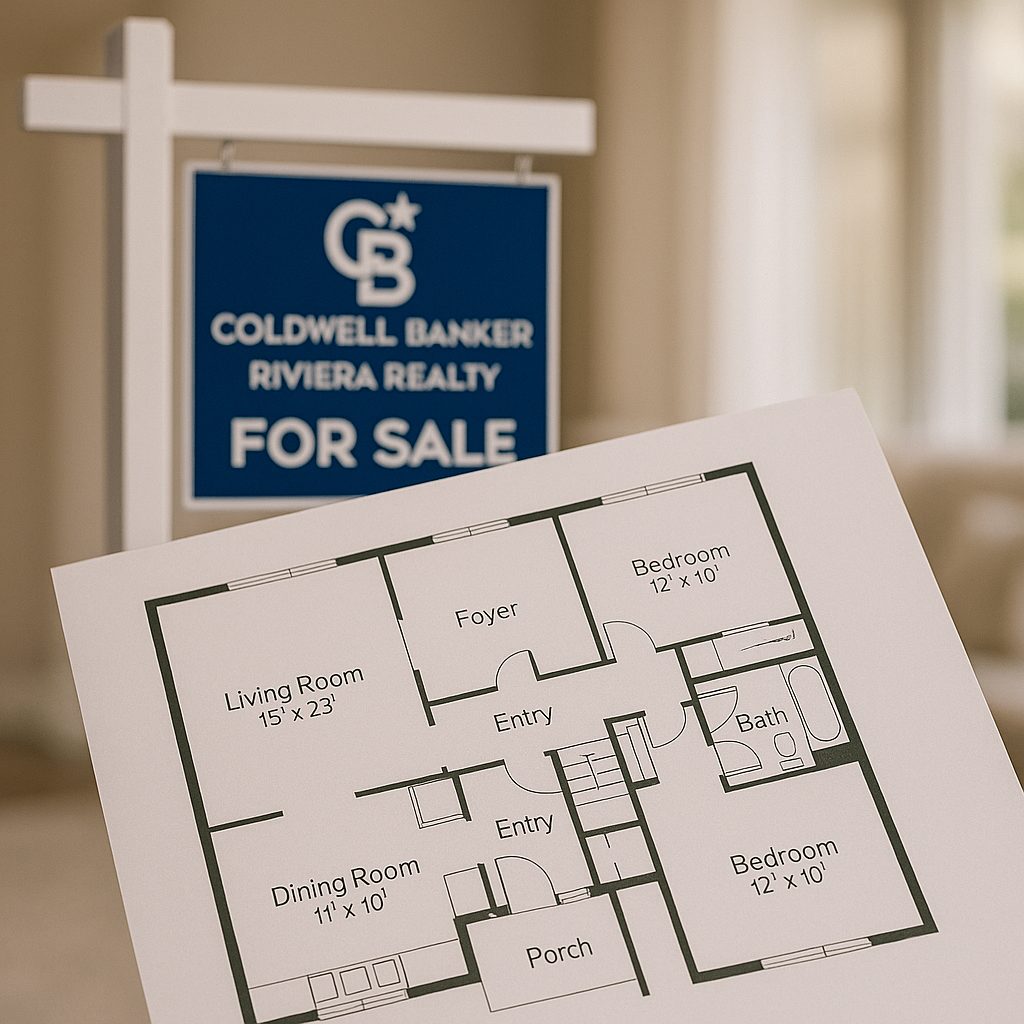
Supreme Court Clears the Way for Real Estate Pros to Use Floor Plans — A Win for Buyers, Sellers, and Agents Alike
Great news for the real estate world — and for everyone right here in Ocean County who’s thinking about buying or selling a home.
The U.S. Supreme Court has officially closed the book on a long-running legal case about whether agents and brokerages can use floor plans when marketing homes. By declining to hear an appeal, the Court upheld a lower ruling that says floor plans used in property listings are protected under fair use.
In simple terms: real estate professionals can continue including floor plans in their listings — confidently and legally.
Why This Matters for Buyers and Sellers
Floor plans are more than just lines on paper. They’re one of the most valuable tools a buyer can have before setting foot inside a property. A clear layout helps people picture themselves in a home — how furniture might fit, where sunlight hits the living room, or whether that spare bedroom could become an office or guest space.
For sellers, offering a detailed floor plan helps attract serious buyers who already know the home meets their needs. And for appraisers, lenders, and even local building departments, floor plans provide essential information that helps transactions move smoothly.
As Wendell Bullard, chair of the National Association of Realtors® (NAR) Legal Action Committee, said:
“Floor plans are vital pieces of information for consumers.”
The Case That Sparked Change
The legal battle began back in 2018, when a Missouri architect sued two real estate agents for using floor plans based on his original home designs. Over several years, the case worked its way through the courts, raising serious questions about how agents could legally market homes.
Recognizing the potential impact nationwide, NAR stepped in to defend the agents and the broader industry. Their advocacy helped make the case that floor plans aren’t blueprints for building — they’re informational tools for selling.
In January, the Eighth U.S. Circuit Court of Appeals agreed — and now, with the Supreme Court declining to intervene, that decision stands as the law of the land.
What It Means for Our Local Clients
Here at Coldwell Banker Riviera Realty, we believe that more information means better decisions. Whether you’re buying your first home in Forked River, upgrading in Barnegat, or downsizing in Waretown, having access to clear, accurate floor plans helps you visualize your next move with confidence.
This ruling not only protects real estate professionals — it protects consumers by keeping the buying and selling process transparent, efficient, and informed.
So, if you’re getting ready to list your home, rest assured: your Coldwell Banker Riviera Realty agent can include detailed floor plans in your marketing package, helping your property stand out to the right buyers.
Because when it comes to showcasing your home, clarity isn’t just helpful — it’s essential.
 Coldwell Banker Expands Global Presence With New Franchise in Switzerland


© 2024 Coldwell Banker Real Estate LLC
